Three years on, children in Sudan don’t know a life without conflict
April 15, 2026
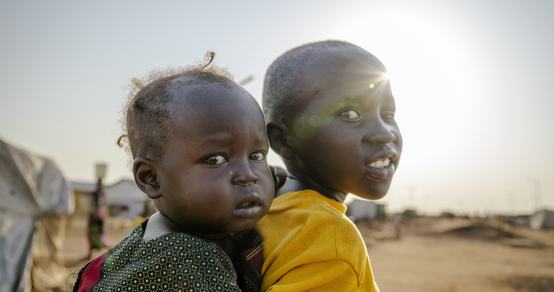
The scale of violations against children in Sudan is staggering, and the failure to protect them continues. Child rights violations in Sudan are widespread, severe, and systemic, driven largely by the ongoing conflict which broke out in April 2023.
No place to call home
Sudan remains the worst displacement crisis in the world for children. 13 million people have been forced from their homes, with children often being separated from their parents whilst fleeing the violence.
Children are living in camps, on the move, or alone – without protection or stability. Other communities are now hosting growing numbers of displaced people.
“My daily life has become very difficult. Before, men and women could find work, but now there is no work and everything has become expensive,” said a caregiver living in displacement.
As displaced families try to cope with fewer options, protection risks for children increase. War Child’s partners say children are facing challenges that were previously uncommon, including child labour and early marriage.
“Our work has shifted from development-oriented programming to emergency response. We are now focusing more on child protection, psychological support, and responding to displacement,” one local partner explained.
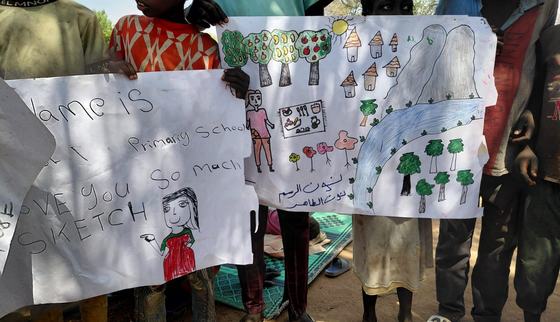
Children displaced by conflict in Sudan
Children are always the victims of war
Civilian spaces where children should be safe, like homes, hospitals, markets, schools, and displacement camps, are the targets of ongoing attacks.
There are documented cases of rape and sexual assault, including against very young children. Sexual violence is being used as a weapon of war, and children, especially girls, are facing extreme abuse with little access to support or justice.
This exposure to extreme violence, loss, and instability can be seen reflected in these children, with many showing signs of trauma, fear, and distress. They continue to feel the impacts even after they have fled, as insecurity and risks persist in displacement settings. Even those children who survive physically are deeply affected in the long-term.
War Child’s Emergency Response Manager for Sudan, Ashan Abeywardena, explains that children are becoming numb to the violence around them.
“The psychological impact of this war is immense and can be seen everywhere. It is heartbreaking to hear when parents talk about children who aren’t afraid of drones anymore, and that they’ve grown accustomed to the sound of war.”
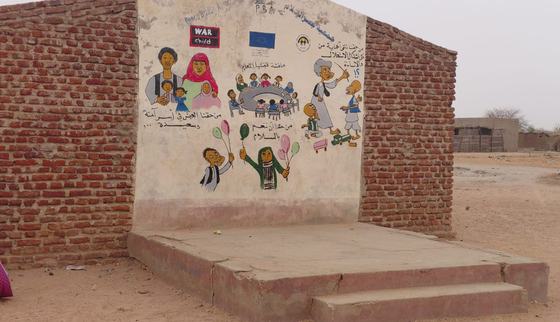
A school building in a displacement camp
A generation of lost learning
Nearly 14 million children are out of school due to the conflict. Schools have been destroyed, closed, or used as shelters. For children, days that were once shaped by learning and play now revolve around waiting, helping at home, and adjusting to new surroundings.
“I studied in high school but had to stop. I miss my school, my friends, and most of all my mother. I hope to become a nurse so I can help my family and support my community,” said a 16-year-old girl displaced by the conflict.
A staff member from one of our partner organisations explains, that without "urgent and sustained support, there is a real risk of long-term harm to an entire generation.”
War Child’s response
Since the end of 2024, War Child has working with local partners in Sudan to reach conflict affected children and their families and provide them with essential emergency support to help them on the road to recovery.
In 2025, we launched programmes in in several regions that reached a total of 12,317 individuals with child protection, psychosocial and education support and services including case management and information sharing.
6,641 children from displacement camps were provided with mental health care through mobile psychosocial support clinics. Another 670 children were provided with exam preparation, tutoring, and study materials, to help them learn amidst all the disruption.
Community-based child protection committees were established. Child rights awareness sessions reached around 1,500 boys and girls, with more targeted sessions for about 493 caregivers and school committee members.
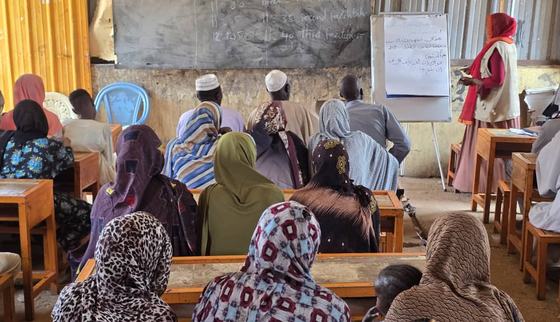
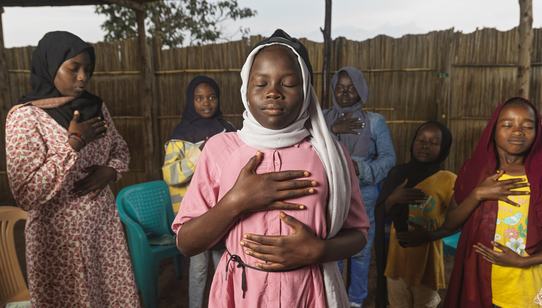
A War Child led positive parenting workshop in Sudan
We must not stop talking about Sudan
For people outside Sudan, the crisis can feel distant. But for children, it shapes everyday life. It means growing up without school, constant danger outside the front door, and living with uncertainty about what tomorrow will bring.
Despite everything, children continue to hold on to their hopes, to return to school, to help their families, and to grow up in peace.
Communities continue to support children where they can, even as resources become more limited.
Three years into the conflict, children in Sudan are still waiting for safety, for education, and for the chance to simply be children again.