Protection and Education Amidst War: Laura’s Life as a Humanitarian in Lebanon
April 14, 2026
Read the original Arabic text here.
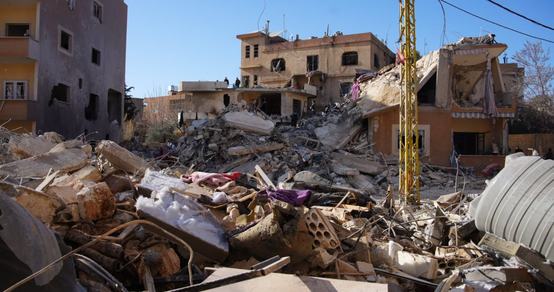
Over 390,000 children are now displaced across the country, and 125 were killed in Israeli airstrikes (1). Violence in Lebanon is not recent. For years, Lebanon has struggled with conflict, economic collapse and instability. Laura, a War Child staff member, shares with us how she navigates her days as a humanitarian amidst war.

My name is Laura*, a mother and mentor from southern Lebanon. I work as a Technical Education Officer at War Child in Lebanon, and I hold a master’s degree in education. My role is to support teachers and schools through training and practical guidance. Listening to teachers’ experiences and daily challenges is more than just a job to me; it’s a commitment to show up and contribute.
I grew up in an environment marked by instability, and that’s what shaped my perspective and career. These circumstances made me value safety, support and the role education plays in giving children a sense of stability. With the current war in Lebanon, like the previous ones, balancing personal safety and responsibility is difficult, especially when my own family is in unsafe areas. I avoid unnecessary risks, because if I am not safe, I cannot support others. Simply being present with children, even for a short time, can reassure them that they are not alone.
However, the pressure can feel overwhelming, so I try to hold on to simple things, routine, work, and spending time with my son, which give me a sense of purpose and balance. Support from colleagues also makes a big difference.
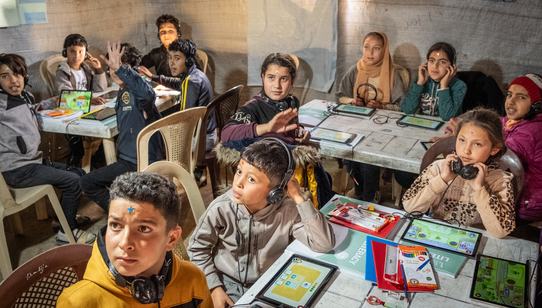
For children in these conditions, we often cannot begin with traditional education. Many children are displaced and have experienced hardship, so our focus starts with psychosocial support, creating safe spaces through play, drawing, or simply being present. That’s how our work becomes more flexible and centred on children’s immediate needs.
The biggest challenge here is instability. Many children lack consistent environments and access to education, making it hard for them to focus on learning while dealing with fear, anxiety, and exhaustion. We try to integrate learning into daily activities, but balancing education with emotional safety is not easy.
The Little Things Matter
Impact often appears in small moments: a quiet child begins to speak, or a withdrawn child starts to play. Even creating a brief sense of safety or comfort is meaningful.
One child stays in my mind, a girl with limited mobility who spent most of her time isolated, sitting on the ground at a shelter. After we were able to provide her with a customised wheelchair, she gradually began to move, connect, and participate. What stayed with me was not just her smile, but how her presence changed. It reminded me that even small interventions can open the door to something much bigger, a child’s sense of belonging.